Pm Kisan Scheme Details are important for Indian farmers who want to receive financial assistance from the central government. However, many farmers still face confusion about registration, eligibility, beneficiary lists, e-KYC, and installment payments. Some applicants also struggle to understand why their names are missing from the beneficiary list or why their payments are delayed. In this article, I will explain the complete scheme information in simple Hinglish. You will learn how to apply online, check your PM Kisan status check, verify payment details, understand eligibility conditions, and solve common registration problems step by step.
PM Kisan Scheme Details: Quick Summary
| Details | Information |
|---|---|
| Scheme Name | Pradhan Mantri Kisan Samman Nidhi Yojana |
| Short Name | PM-KISAN |
| Launched | 24 February 2019 |
| Benefit Amount | Rs. 6,000 per year |
| Installments | 3 installments of Rs. 2,000 |
| 21st Installment | Released on 19 November 2025 |
| Next Installment | 22nd installment date not officially announced by 31 December 2025 |
| e-KYC | Mandatory |
| Payment Method | Direct Benefit Transfer (DBT) |
| Beneficiary List | Available online |
| Official Website | https://pmkisan.gov.in/ |
| Required Documents | Aadhaar, bank details, land records, mobile number |
| Helpline Number | 155261 / 011-24300606 |
Latest Update: The Government of India released the 21st installment on 19 November 2025. Approximately 9 crore farmers received financial assistance worth Rs. 18,000 crore through Direct Benefit Transfer. Eligible beneficiaries received Rs. 2,000 each.
As of 31 December 2025, the government had not officially announced the release date of the 22nd installment.
Recommended:PM Kisan Status Check Balance Mobile Number: Easy Guide
Eligibility Criteria: Who Can Apply for PM Kisan?
Before applying, farmers should understand the eligibility rules. The government provides financial support to eligible landholding farmer families who satisfy the scheme conditions.
Here are the main eligibility requirements:
- Indian Citizen: The applicant must be an Indian citizen.
- Agricultural Land: The farmer family must own cultivable agricultural land recorded in the state or UT land records.
- Age Limit: There is no specific minimum or maximum age limit under the PM-KISAN scheme. However, the family definition includes the husband, wife, and minor children.
- Small and Marginal Farmers: Marginal farmers generally have agricultural holdings below 1 hectare, while small farmers have holdings between 1 and 2 hectares.
- Landholding Limit: The earlier 2-hectare restriction was removed. Eligible landholding farmer families can receive benefits irrespective of their landholding size, subject to other conditions.
- One Benefit Per Family: Only one eligible beneficiary can receive the benefit per family. A family means husband, wife, and minor children.
- Land Ownership Date: The general eligibility cutoff for land ownership is 1 February 2019. Inheritance following the death of a landowner is treated under the applicable exception.
- Bank Account: The beneficiary needs a valid bank account suitable for receiving DBT payments.
- e-KYC: Aadhaar-based e-KYC must be completed.
Who Is NOT Eligible for PM Kisan?
Some individuals and farmer families are excluded because of their economic or professional status.
The following categories are generally not eligible:
- Income Tax Payers: Individuals who paid income tax in the previous assessment year.
- Government Employees: Serving or retired officers and employees of central or state government departments, public sector enterprises, and regular local body employees. MTS, Class IV, and Group D employees are exceptions.
- Higher Pension Recipients: Retired pensioners receiving a monthly pension of Rs. 10,000 or more, subject to specified employee-category exceptions.
- Professional Workers: Practising registered professionals such as doctors, engineers, lawyers, chartered accountants, and architects.
- Institutional Landholders: Agricultural land owned by institutions.
- Constitutional Post Holders: Present or former holders of specified constitutional posts and certain elected representatives.
Important: Eligibility is determined through government verification. Providing incorrect information can result in recovery of the benefits received.
Required Documents for PM Kisan Registration
Farmers should prepare their documents before starting the online registration process. Correct information helps reduce verification errors and payment delays.
| Required Document | Purpose |
|---|---|
| Aadhaar Card | Identity verification |
| Aadhaar-linked Mobile Number | OTP-based e-KYC |
| Bank Passbook | Account number and IFSC verification |
| DBT-enabled Bank Account | Receiving government payments |
| Land Records (Khasra/Khatauni) | Agricultural land ownership verification |
| Active Mobile Number | Registration updates and OTP |
| Passport Size Photo | Identification where requested during local verification |
Why Is Aadhaar-Mobile Linking Mandatory?
Aadhaar-based e-KYC is compulsory for registered PM-KISAN beneficiaries. During OTP-based verification, the system sends an OTP to the mobile number registered with Aadhaar.
If your mobile number is not linked to Aadhaar, you may not receive the verification OTP. In that situation, you can visit a nearby Common Service Centre (CSC) for biometric e-KYC.
Farmers can also use the face-authentication facility through the official PM-KISAN mobile application.
Practical Tip: Check your Aadhaar details, bank account information, and mobile number before applying. This can help prevent unnecessary verification problems.
Step-by-Step Guide: How to Apply and Check PM Kisan Status
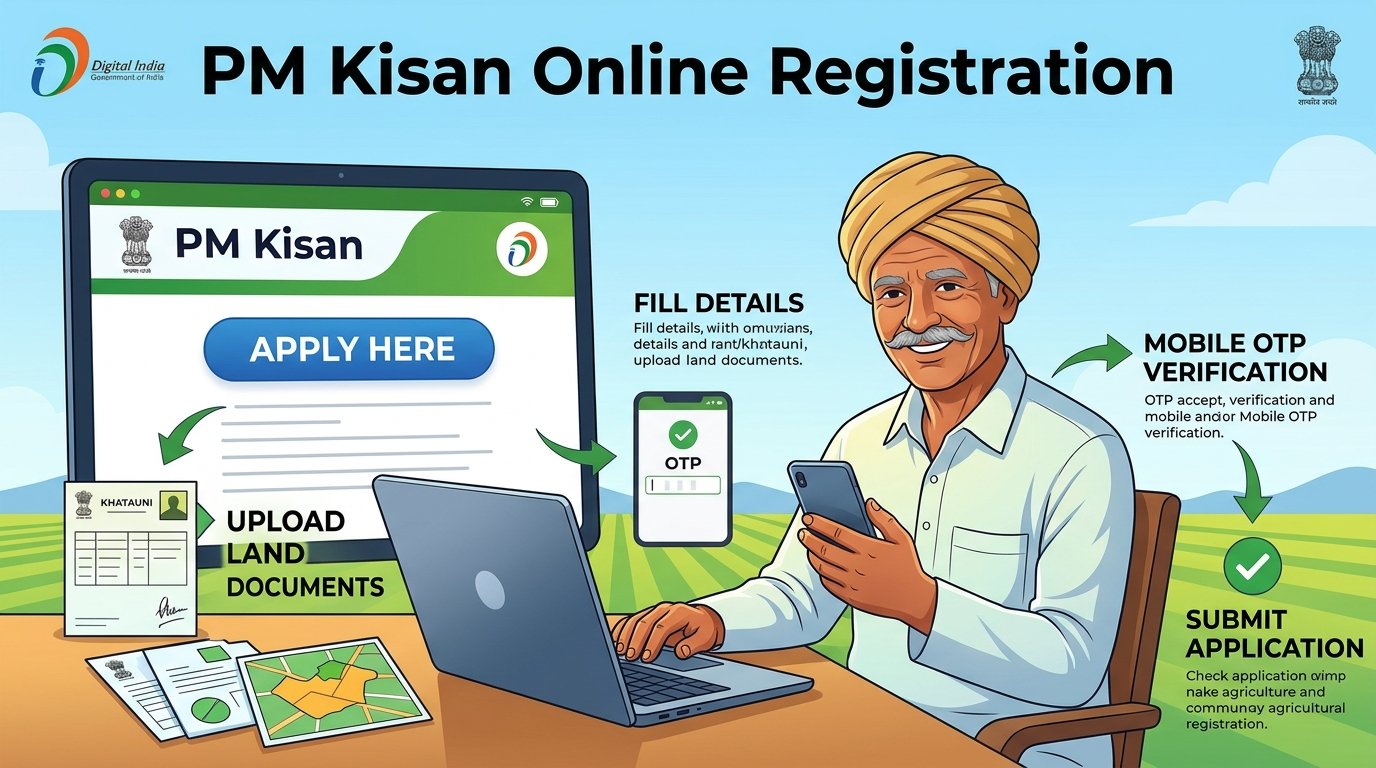
If you are a new applicant or an existing beneficiary, follow these steps carefully. The official PM-KISAN portal provides different facilities for registration, e-KYC, beneficiary information, and payment verification.
Step 1: Visit the Official PM-KISAN Website
First, open Google Chrome or another browser on your mobile or computer. Visit the official website at https://pmkisan.gov.in/.
After opening the homepage, look for the Farmers Corner section. Here, you can find options such as New Farmer Registration, e-KYC, and beneficiary-related services.
Tip: Always use the official government website. Avoid unknown websites asking for registration fees or sensitive banking information.
Step 2: Select New Farmer Registration
If you have never applied for the scheme, select the New Farmer Registration option.
Choose the appropriate category, such as Rural Farmer Registration or Urban Farmer Registration. Enter your Aadhaar number, mobile number, state, and other requested information.
Complete the verification process and continue with the application.
Tip: Enter your name exactly as mentioned on your Aadhaar Card. Incorrect spelling can create verification issues.
Step 3: Enter Your Agricultural Land Details
After entering your personal information, provide the agricultural land details requested during registration.
Keep your Khasra, Khatauni, or other state-recognised land records ready. The concerned state authorities will verify your land ownership information.
Remember that the general land ownership cutoff date is 1 February 2019, with an applicable inheritance exception.
Tip: Check your land records carefully before submitting the application. If the ownership information is incorrect, contact your local revenue department.
Step 4: Provide Your Bank Account Information
Now enter your bank account details, including your account number and IFSC code, wherever requested.
The government transfers the installment directly into the eligible beneficiary’s bank account through DBT. Aadhaar seeding and proper bank mapping are important for successful payment.
Tip: Verify your bank details using your passbook. Do not enter another person’s account information without checking the scheme requirements.
Step 5: Complete Aadhaar e-KYC
After registration, complete the mandatory e-KYC process.
Visit the official portal and select the e-KYC option. Enter your Aadhaar number and follow the instructions for OTP verification.
If online verification does not work, visit your nearest CSC for biometric authentication. Face-authentication is another available option through the official mobile application.
Tip: Never share your Aadhaar OTP with unknown agents or callers. Keep your registered mobile number active.
Step 6: Check Your PM Kisan Beneficiary Status
If you have already registered, you can check your application and payment information online.
Visit the official PM-KISAN website and select the Know Your Status option. Enter your registration number and complete the captcha and OTP verification as instructed.
The status facility can show useful information, including payment status, bank details, and account credit information.
Tip: If you do not know your registration number, use the Know Your Registration Number facility available on the portal.
Step 7: Verify Your Installment Payment
After checking your beneficiary information, look at the payment details.
Check whether your installment has been processed and whether the bank account has received the amount. You can also check your bank passbook or account statement for confirmation.
If the payment is unsuccessful, check your Aadhaar-bank linking and DBT-related information.
Tip: Do not believe unofficial messages claiming that your next installment is confirmed. Follow government announcements for accurate payment dates.
Step 8: Correct Registration Errors
If your application shows pending verification or rejection, read the reason carefully.
Common reasons include Aadhaar mismatches, incomplete land verification, incorrect bank information, and incomplete e-KYC.
Contact your local agriculture office or CSC to understand which correction is required.
Tip: Keep your registration number and application documents safe. These details will help you follow up on pending applications.
Common PM Kisan Problems and Solutions
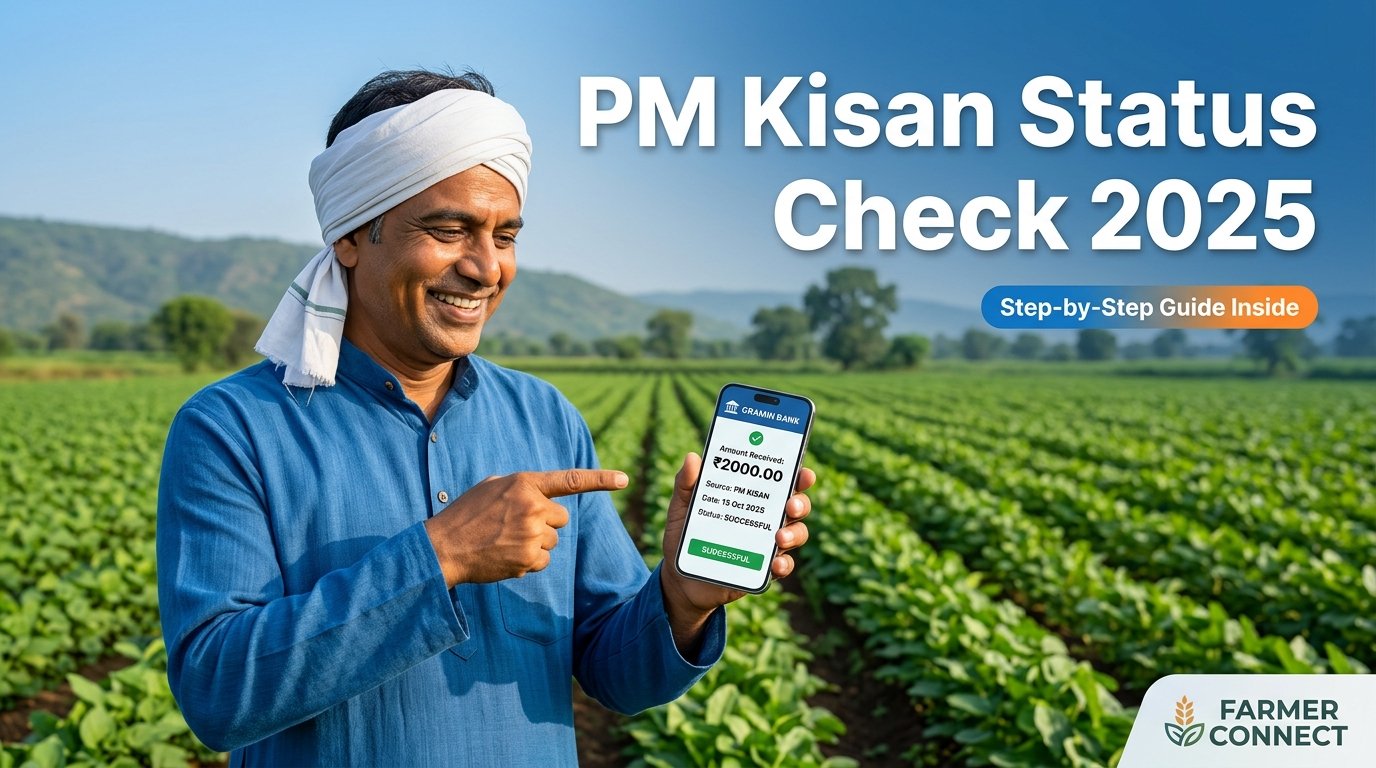
Even after completing registration, some farmers experience difficulties. Here are five common problems and their solutions.
1. e-KYC Failed
This problem may occur because of an incorrect Aadhaar number or OTP verification failure.
Solution: Check your Aadhaar details and try again. If OTP verification is unavailable, visit a CSC for biometric e-KYC.
2. Installment Not Received
Your payment may be delayed because of bank verification or DBT-related issues.
Solution: Check your beneficiary status and contact your bank to verify Aadhaar seeding and payment arrangements.
3. Name Missing from Beneficiary List
Your application may still be under verification or contain incorrect land information.
Solution: Contact your local agriculture officer and request verification of your land records and registration details.
4. Incorrect Bank Account Details
An incorrect account number or IFSC code can cause payment failure.
Solution: Visit your bank, correct your account information, and check whether your account is properly enabled for DBT.
5. Land Verification Pending
The concerned state department may not have completed your land ownership verification.
Solution: Contact the local revenue department or agriculture office with the required land documents.
Frequently Asked Questions (FAQs)
1. What Are the Main PM Kisan Scheme Details?
The scheme provides Rs. 6,000 annually to eligible landholding farmer families. The amount is paid in three installments of Rs. 2,000 through DBT.
2. How Can I Complete a PM Kisan Status Check?
Visit https://pmkisan.gov.in/, select Know Your Status, enter your registration number, and complete the required verification.
3. When Was the 21st PM Kisan Installment Released?
The 21st installment was released on 19 November 2025. Around 9 crore farmers received financial assistance through DBT.
4. Is e-KYC Compulsory for PM Kisan Beneficiaries?
Yes. Aadhaar-based e-KYC is mandatory. Farmers can complete verification through OTP, biometric authentication, or face authentication.
5. Can Farmers With More Than 2 Hectares of Land Apply?
Yes. The earlier 2-hectare landholding restriction was removed. Eligible farmer families can receive benefits regardless of landholding size, subject to the other eligibility conditions.
Related Government Schemes for Farmers
Apart from PM-KISAN, the Indian government operates other schemes to support farmers.
- Pradhan Mantri Fasal Bima Yojana (PMFBY): Provides crop insurance coverage against specified risks and crop losses.
- Kisan Credit Card (KCC): Helps eligible farmers access agricultural credit through participating banks.
- Pradhan Mantri Krishi Sinchai Yojana (PMKSY): Supports irrigation facilities and improved water-use efficiency in agriculture.
Farmers should check the respective official government websites for application rules and eligibility.
Join Our Telegram or WhatsApp Group
Want to receive the latest PM-KISAN updates, installment announcements, beneficiary list information, and registration guidance?
Join our Telegram or WhatsApp group to stay connected with useful government scheme updates.
We regularly share important information to help farmers understand application procedures and avoid common mistakes.
Join our community today and stay updated with the latest farmer welfare information!
Important Disclaimer
This article is an informational and unofficial guide. We are not affiliated with the Government of India or the PM-KISAN Department. Registration approval, eligibility verification, and installment payments are controlled by the concerned government authorities.
For accurate information, always visit the official website:
Safety Warning: Never share your Aadhaar OTP, bank PIN, ATM details, or online banking password with unknown people. Avoid paying unauthorized agents who promise guaranteed registration or installment approval.
Conclusion
Pm Kisan Scheme Details are useful for every eligible farmer who wants to understand government financial assistance, registration, beneficiary verification, and installment payments. Under this scheme, eligible farmer families receive Rs. 6,000 annually in three installments of Rs. 2,000 directly into their bank accounts.
To avoid unnecessary payment delays, complete your Aadhaar e-KYC, verify your bank account information, and ensure that your agricultural land records are correct. Existing beneficiaries should also perform a regular PM Kisan status check to stay informed about their application and payment details.
I hope this complete guide has helped you understand the scheme in a simple way. Bookmark this article, share it with other farmers, and leave a comment if you have any questions. You can also subscribe to our website for more useful government scheme updates.